The web has made life simpler in many ways for example, online shopping and digital payments, remote working, social media, and even instant communications. Alongside these benefits is a rising number of security threats, which the majority of people who are just beginning their journey are unaware of.
There is no need to be an expert in hacking or technology to be aware of security. Indeed, novices tend to be the ones most at risk as attackers realize that they could be unable to recognize warning indicators. But the good news? If you know the common dangers security becomes more simple.
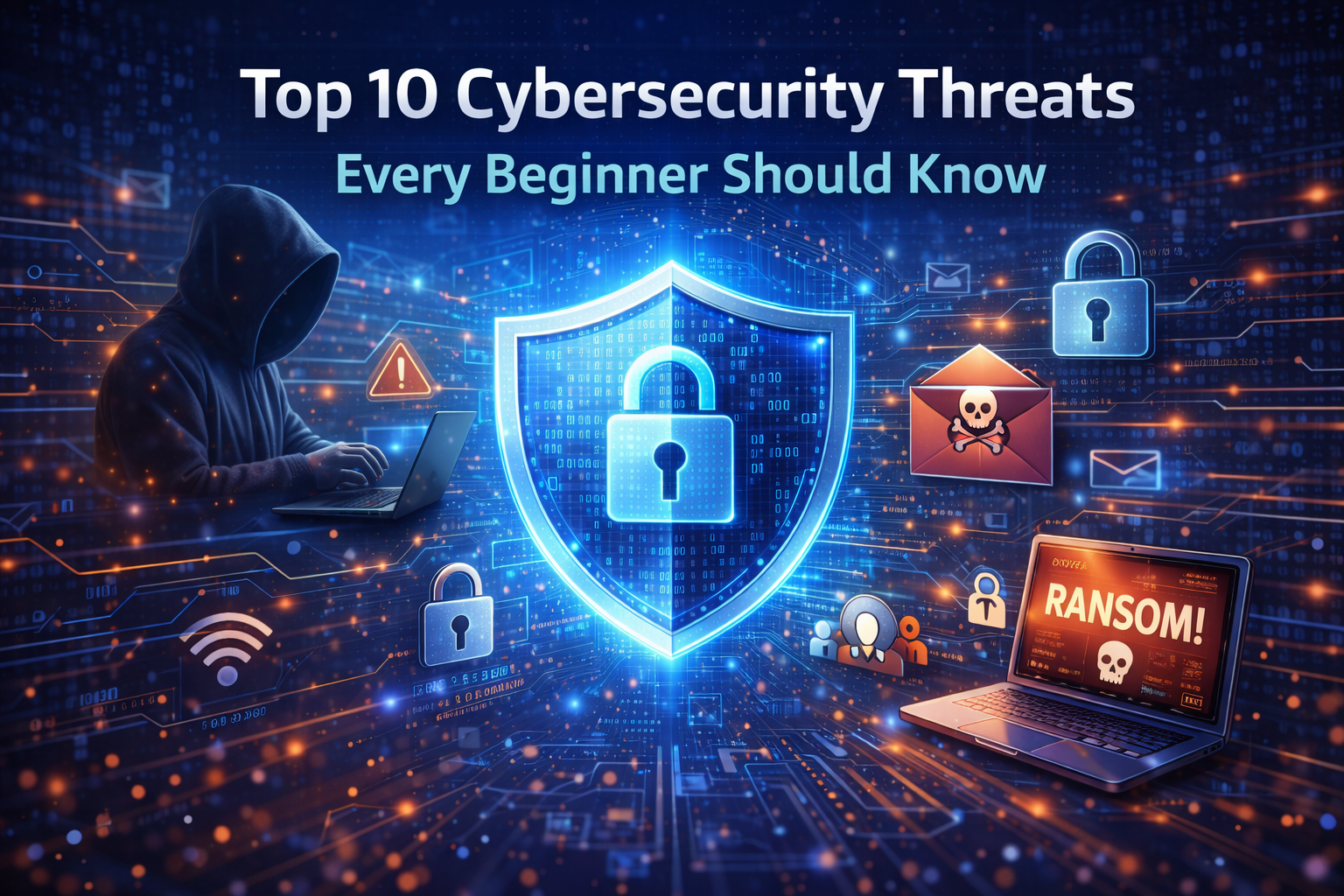
In this piece this article, we’ll discuss the most important cybersecurity risks everyone who is new to cybersecurity should understand that are described in simple, practical terms.
1. Phishing Attacks
Phishing is one the most frequent and risky security threats of the present. This usually takes forms of fake email or messages, as well as websites that appear to be legitimate.
There’s a chance that you’ll receive an email which appears as if it’s from your banking institution, a delivery service or even a well-known app inquiring users to “verify” your details. When you click on the link and input your details, the email goes directly to the hacker.
The reason it’s risky:
Phishing could be able to steal bank passwords, passwords and private information in a matter of moments.
2. Malware (Malicious Software)
The term “malware” is used to describe for malicious software that is designed to harm or steal data from your computer. It includes worms, viruses spyware, trojans, and worms.
The malware can infiltrate your system via unsecure downloading, malware-infected emails false apps, unsafe websites.
What’s the risk?
Malware could cause your device to slow down and monitor your activities as well as steal information, and possibly take complete control of your computer.
3. Ransomware
Ransomware is one type of malware which locks your system’s files and asks for payment to gain access.
Such an attack can result in a devastating loss for both business and individuals alike. While paying a ransom, it doesn’t assure that your data is going to be recovered.
It’s a risk:
You could be able to lose crucial files, images and business records forever.
4. Weak Passwords
Utilizing weak or repetitive passwords is a major mistakes that beginners commit. For example, using passwords such as “123456,” “password,” or having the same password across all devices make it easy for hackers.
Hackers typically employ automated tools to crack passwords in a matter of seconds.
The reason it’s risky:
Once one account has been compromised, hackers have access to many other accounts with that same password.
5. Public Wi-Fi Risks
Free WiFi in restaurants, airports and malls is practical, but however extremely risky. Networks that are public tend to be insecure and make it much easier for hackers to access your personal information.
Hackers may monitor your online activities, steal credentials to log in, or introduce malware.
It’s a risk:
Sensitive data like bank information and passwords could be divulged without even.
6. Social Engineering Attacks
Social engineering isn’t built on software hacking It relies on the trickery of people.
The attackers trick victims to divulge details by claiming to be someone they trust like technical support, a friend or company representative.
It’s a risk:
Even strong security systems could fail if an individual is manipulated into sharing personal data.
7. Data Breaches
A breach of data occurs when information that is sensitive gets accessed or released without authorization. It could be due to attacks, security weaknesses or even insider errors.
Even if you didn’t make any mistakes the information you’ve provided could be accessed by a business or service you utilize.
What’s the risk?
The information that’s leaked could be used to perpetrate fraud, identity theft, and financial fraud.
8. Fake Apps and Software
Certain software and apps are secure, especially when downloaded from sources that are not official. Fake apps often look real but contain hidden malware.
Beginning users may install cracking software or other unknown software without checking reviews and the permissions.
The reason it’s risky:
These apps could track you, take data or even damage the device you’re using.
9. DDoS Attacks (Distributed Denial of Service)
DDoS attacks flood websites or other online services with massive volume of traffic, leading to it stop working or to go down.
Though beginners typically aren’t their primary target but they can be affected by service interruptions or even slowdowns as a result of these types of attacks.
What’s the risk?
Companies could be unable to retain customers, revenues, and even trust if services cease to function.
10. Outdated Software and Systems
It may appear safe, but systems that aren’t updated are often vulnerable to security flaws that hackers exploit.
Updates often include crucial security patches to fix a variety of security holes.
What’s the reason why it’s a risk:
Old software allows attackers to gain an access point to your network or device.
How Beginners Can Stay Safe Online
It doesn’t require any sophisticated tools or technical expertise to safeguard yourself. Begin with these basic routines:
-
Use strong, unique passwords for every account
-
Allow two-factor authentication where possible
-
Do not click on any suspicious links or attachments
-
Software and applications are downloaded only from reputable sources
-
Make sure your devices and applications are up to date
-
Utilize firewalls and antivirus to protect yourself.
-
Be wary of public Wi-Fi networks.
The issue of cybersecurity has more to do with awareness rather than technology.
Why Learning Cybersecurity Early Matters
Knowing cybersecurity-related threats in the early stages can help you avoid major problems at a later date. No matter if you’re a college student, self-employed, business owner or a casual user of the internet Cybersecurity affects everybody.
The more you know and gain experience, it’s harder for criminals to elude you.
Final Thoughts
Security threats can sound frightening however, knowledge is the most effective security. The majority of attacks fail not because the systems are insecure or vulnerable, but rather because people don’t know about them.
When you’re familiar with these top 10 cybersecurity risks, you’re one step further. Being safe online doesn’t require any special expertise, but good habits, prudence and a keen eye.
In the modern world of technology security isn’t an option. It’s a fundamental capability that everyone should be able to master.